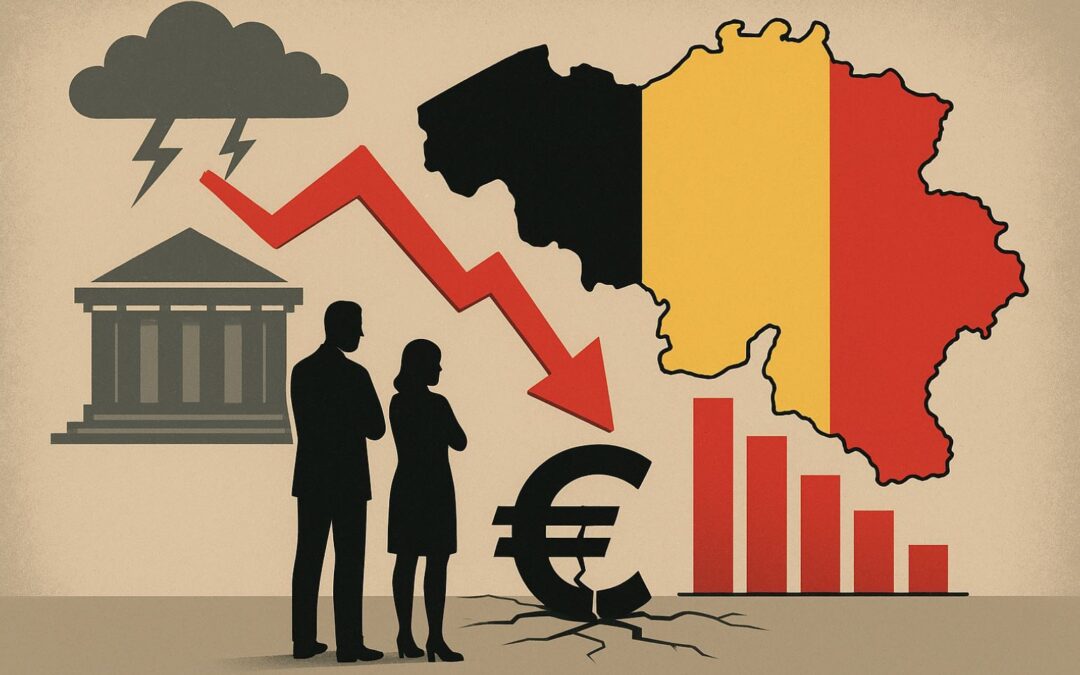
On June 9, 2024, Belgium held regional elections that left the Brussels Region in a state of profound political paralysis. More than a year later, the Region remains without a functioning government, trapped in a feedback loop of political deadlock and fiscal deterioration. The consequences are stark: a ballooning deficit, downgraded credit ratings, and the looming threat of a liquidity crisis that could disrupt the day-to-day functioning of its institutions.
In his incisive analysis, Guillaume Delvaux, PhD candidate in constitutional law at UCLouvain, explores the structural and financial vulnerabilities that have brought the Brussels Region to the brink. His article offers a comprehensive examination of how institutional complexity, fragmented political representation, and rising expenditures have converged to create a uniquely precarious situation within Belgium’s federal system.
Delvaux highlights the Region’s deteriorating fiscal health, with debt nearing €15 billion and a deficit that has hovered around €1.5 billion annually since 2022. He also scrutinizes the limitations of Belgium’s federal design, particularly the “no-bailout” clause enshrined in law, which complicates any potential intervention by the federal government. The analysis raises critical questions about the sustainability of fiscal autonomy in federated entities and the legal and political pathways available should Brussels face default.
This piece not only sheds light on the Brussels Region’s current crisis but also prompts broader reflection on the resilience of federal systems in times of financial distress. Delvaux’s work is a vital contribution to the ongoing debate on intergovernmental fiscal relations and the future of regional governance in Europe.
Read the full article by Guillaume Delvaux [here].